
Why Root Canals Sometimes Need Retreatment
Root canal therapy is designed to remove infection from inside your tooth and seal it to prevent future problems. In most cases, the procedure works well and the tooth heals completely. However, a small percentage of root canals do not heal as expected. Retreatment gives your tooth a second chance.
Common Reasons a Prior Root Canal May Not Have Healed
Several factors can cause a root canal to fail. The original treatment may have missed narrow or curved canals that were difficult to reach. New decay may have developed around the crown or filling, allowing bacteria to re-enter the tooth. In some cases, the tooth may have developed a crack or fracture that was not visible at the time of the first procedure. Whatever the cause, retreatment addresses these issues by reopening the tooth, removing the old filling material, and thoroughly cleaning the canals.
What Happens If a Failed Root Canal Goes Untreated
Ignoring a failed root canal is not recommended. Without treatment, the infection can spread to the surrounding bone, causing pain, swelling, and abscess formation. Over time, the tooth may become too damaged to save, leading to extraction. Addressing the problem early gives you the best chance of preserving your natural tooth and avoiding more complex procedures.
Why Choose Dr. Molina for Retreatment in Los Angeles
When you need a root canal specialist in Los Angeles, Dr. Sonia Molina brings advanced training and technology to every retreatment case. She is an endodontist who performs these procedures regularly, and her skill level means you can trust your tooth is in capable hands.
Operating Microscope Precision — An Advantage Most Offices Can't Offer
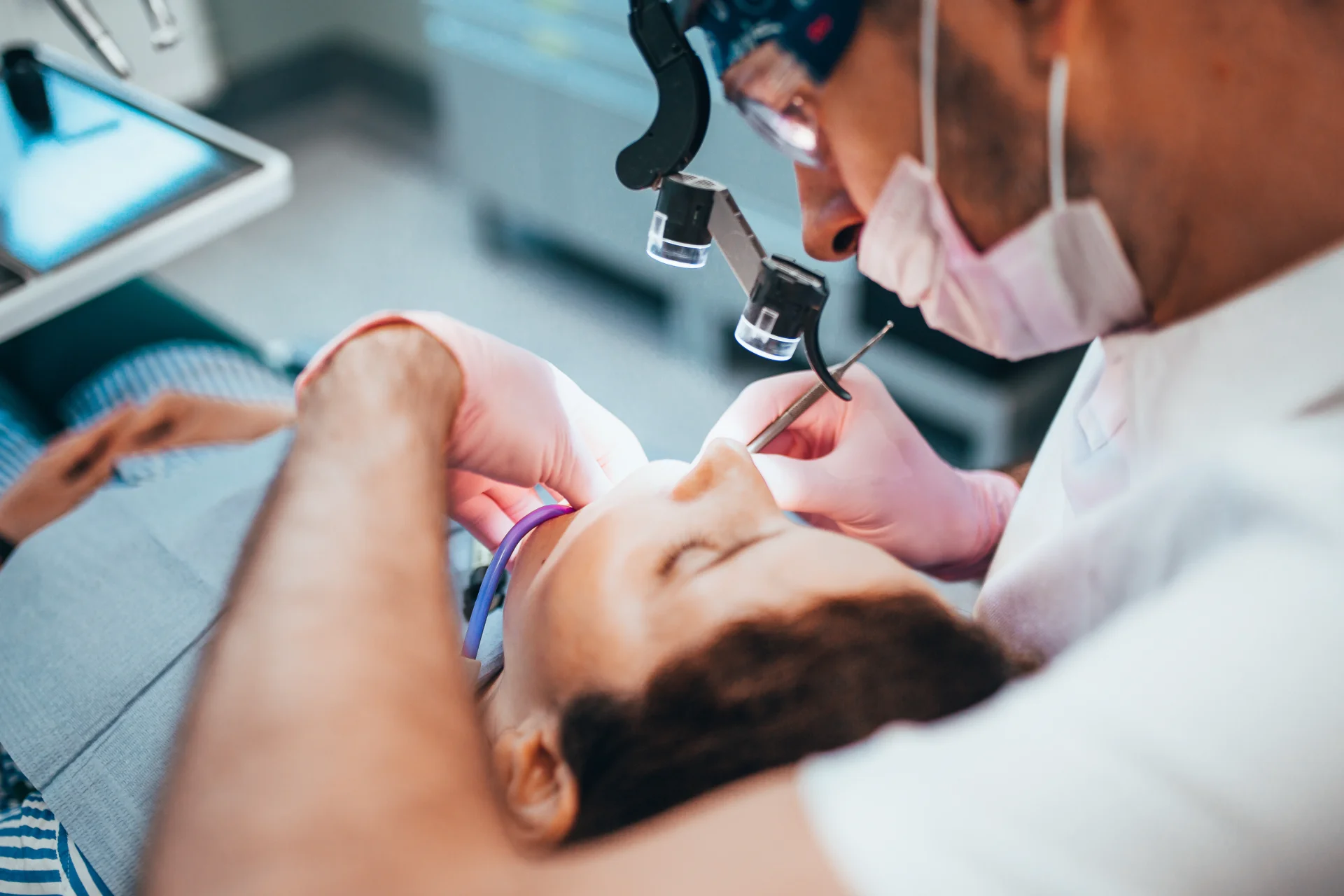
Dr. Molina uses a high-powered operating microscope for every retreatment procedure. This tool provides up to 25x magnification and a bright, focused light source, allowing her to see details that are invisible to the naked eye. She can locate hidden canals, identify cracks, and remove old filling material with far greater accuracy than is possible with standard techniques. This level of precision is a significant advantage for retreatment, where every detail matters.
Specialist-Level Care, No Referral Needed
One of the most convenient aspects of choosing San Jose Dental Clinic is that you do not need a separate referral to see an endodontist. Dr. Molina is part of our in-house team, so you receive specialist-level care within a familiar general practice setting. This means fewer appointments, less coordination, and a more seamless experience.
Sedation Options for a Comfortable Experience
Retreatment can feel daunting, especially if you have had an uncomfortable dental experience before. We offer several sedation options to help you relax, including nitrous oxide (laughing gas) and IV sedation with a board-certified dental anesthesiologist who comes to the office when needed. You can choose the level of comfort that feels right for you.
Retreatment vs. Original Root Canal Therapy — What's Different
If you have already had a root canal, you may wonder how retreatment compares. While the goal is the same — saving your tooth — the procedure itself is more complex.
How Retreatment Differs From Your First Procedure
During your initial root canal therapy, the dentist removes infected pulp from a tooth that has never been treated. In retreatment, Dr. Molina must first remove the existing filling material, gutta-percha, and any posts or crowns that were placed during the original procedure. The canals are then cleaned, reshaped, and disinfected before being resealed. The process takes longer and requires more precision, which is why the operating microscope is especially valuable here.
When Retreatment Is the Right Choice vs. Apicoectomy
In some cases, retreatment may not be the best option. If the tooth has a crown or post that cannot be removed, or if the canals are blocked by calcification, an apicoectomy may be recommended instead. This is a small surgical procedure where the tip of the root is accessed through the gum, and the infected tissue is removed. Dr. Molina will evaluate your specific situation and recommend the approach that gives you the best chance of saving your tooth.
What to Expect During Root Canal Retreatment at San Jose Dental Clinic
Knowing what to expect can help ease any concerns you may have about the procedure.
Step-by-Step Overview of the Retreatment Process
Your first appointment begins with a thorough examination, including digital X-rays to assess the condition of the tooth and surrounding bone. Dr. Molina will review your symptoms and discuss the treatment plan with you. On the day of the procedure, local anesthesia is administered to ensure you are comfortable. Dr. Molina then removes the existing crown or filling, accesses the tooth, and uses the operating microscope to carefully remove the old material from the canals. The canals are cleaned, disinfected, and filled with new material. A temporary crown or filling is placed to protect the tooth between visits.
Recovery, Aftercare, and Next Steps
After the procedure, you may experience mild soreness or sensitivity for a few days. Over-the-counter pain relievers and a soft diet can help manage any discomfort. You will return for a follow-up appointment to ensure the tooth is healing properly. A permanent crown or restoration will be placed once the tooth is stable. Good oral hygiene and regular checkups will help your tooth stay healthy for years to come.
